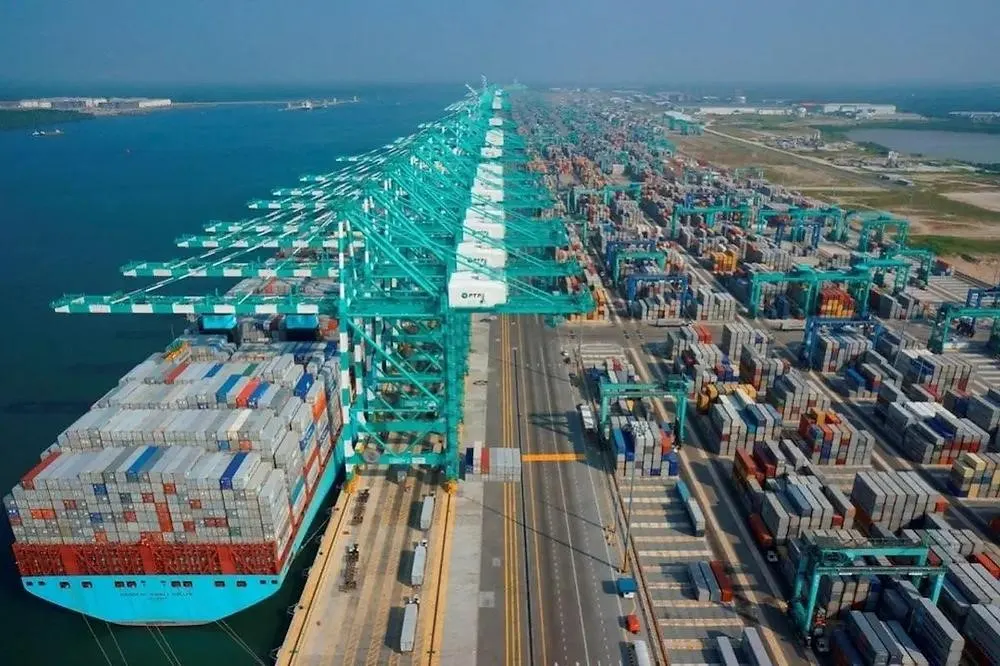
Authorized equipment action and execution verification at a port terminal

Operational Optimization and Physical Action for Port and Terminal Operations

Port and terminal operations depend on coordinated decisions across vessel calls, berth assignments, quay cranes, container yards, terminal tractors, gate activity, and supporting equipment. When these activities are planned in separate systems or updated at different times, a change in one area can create delays and resource conflicts elsewhere.

Discuss an operational optimization workflow

PortOps AI explores how Physical AI and Artificial Intelligence of Things (AIoT) can connect operational data with constrained decision support and authorized physical action. The objective is to help terminal teams evaluate options against current operating conditions, available resources, service priorities, and equipment limits. Any physical execution requires a defined control interface, clear authority, and confirmation of the resulting equipment state.

Coordinate Vessel, Quay, and Yard Activity

A terminal optimization workflow should consider the dependencies between vessel operations and landside activity. A berth or vessel schedule change can affect quay crane assignments, container discharge and loading sequences, yard block availability, horizontal transport demand, and gate or interchange activity. Optimizing one resource in isolation can move congestion to another part of the terminal.

A decision-support approach can bring selected operational information into a shared view, then assess feasible options against terminal rules and current constraints. Depending on the site and available data, relevant inputs may include:

  • Vessel call plans, berth windows, estimated arrival and departure times, and agreed service priorities.

  • Quay crane availability, operating status, assignment, planned work sequence, and maintenance restrictions.

  • Container identity, handling status, destination or yard location, and relevant stowage or transfer instructions.

  • Yard block capacity, equipment availability, traffic conditions, and planned container movements.

  • Terminal tractor or other horizontal transport availability, task queues, travel paths, and dispatch status.

  • Gate appointments, interchange demand, labor or shift availability, and terminal operating rules.

The decision process should account for data freshness and quality. Missing equipment status, delayed movement events, duplicate records, or conflicting timestamps can make a proposed plan unreliable. Where observations are stale or incomplete, the system should flag the uncertainty, request confirmation, or defer to the established operating process rather than silently treating an estimate as a verified fact.

Optimize Against Operational Objectives and Constraints

Operational optimization begins with a clearly defined objective. A terminal may want to improve vessel turnaround, reduce equipment idle time, balance workload across yard blocks, limit unnecessary travel, or improve response to an unexpected change. These objectives can conflict. For example, increasing the utilization of one crane or transport fleet may create queues, safety conflicts, or congestion elsewhere.

The optimization problem should therefore define both the desired outcome and the limits that cannot be crossed. Depending on the workflow, constraints may include:

  • Berth availability, vessel service windows, and operational sequencing requirements.

  • Crane operating envelopes, equipment availability, maintenance restrictions, and safe operating procedures.

  • Yard capacity, container compatibility, stack rules, and access requirements.

  • Traffic routes, equipment travel restrictions, pedestrian separation, and restricted operating zones.

  • Labor availability, shift handovers, task qualifications, and approved work procedures.

  • Service commitments, priority rules, customs or inspection holds, and other business restrictions.

A decision engine can compare candidate schedules, assignments, or dispatch recommendations with a documented baseline policy. The baseline might be the terminal's existing planning rules or a current dispatcher workflow. The candidate method should be assessed under comparable demand and operating conditions, including disruptions and cases where the proposed optimization offers little benefit or performs worse.

The system should also explain the basis of a recommendation in terms that an operations planner or supervisor can review. A proposed assignment is not automatically feasible simply because an algorithm ranks it highly. The terminal's approved rules, equipment status, and responsible personnel remain part of the decision.

Connect Operational Decisions To Authorized Physical Action

Optimization can stop at a recommendation, create a task for an operator, or proceed through an approved equipment interface. These operating modes must be described separately because they carry different authority and integration requirements.

Recommendation and Decision Support

The system presents a suggested berth, equipment assignment, movement sequence, or dispatch priority for review. A planner or supervisor decides whether to use it. The recommendation should retain its source data, timestamp, relevant constraints, and decision rationale so that the user can assess whether the operating situation has changed.

Human-approved Command

An authorized person reviews a proposed action and approves it through the designated workflow. The integration must verify the user's role, target equipment, command parameters, and applicable operating conditions before dispatch. Approval records should be linked to the command and subsequent equipment feedback.

Bounded Autonomous Execution

Where a site has validated the equipment interface and operating safeguards, a narrowly defined action may be executed automatically within approved limits. The permitted action, target, operating envelope, exception conditions, and independent protective functions must be established through engineering and site review. Autonomous execution should not be inferred from an optimization recommendation or a software demonstration.

Define The Equipment Interface, Permissions, and Fallback Behavior

A physical action path may involve an edge gateway, supervisory control interface, programmable logic controller, drive, actuator, or equipment-specific integration. The actual components depend on the terminal's installed equipment and control architecture. PortOps AI should identify these as implementation options until a specific interface has been assessed and verified.

Before any write-capable integration is considered, the implementation team should document:

  • The equipment or system that receives the command and the exact action being requested.

  • The interface specification, command format, permitted parameters, acknowledgment behavior, and timeout conditions.

  • The user or service identity permitted to request or approve the action, including role and access controls.

  • The operating limits, interlocks, equipment protections, and independent safety functions that remain authoritative.

  • The behavior when observations are stale, the command is rejected, communications are lost, or execution is delayed or partial.

  • The manual override, recovery procedure, event log, and responsibility for returning equipment to an approved operating state.

The design should distinguish a workflow request, such as creating a work order or dispatch task, from a direct equipment command. It should also distinguish command acceptance from physical completion. Completion requires subsequent evidence, such as an independently observed equipment state, position, movement event, or other suitable measurement.

Evaluate Performance, Exceptions, and Verified Outcomes

A pilot or controlled evaluation should compare the candidate workflow with a credible baseline. The evaluation plan should define the operational objective, operating period, data sources, constraints, approval mode, and success criteria before results are reviewed.

Depending on the selected workflow, useful measures may include:

  • Vessel turnaround or berth-window performance, with the calculation method and time boundaries defined.

  • Quay crane utilization, productive operating time, idle time, and workload balance.

  • Terminal tractor task cycle time, empty travel, queue time, and dispatch response.

  • Yard rehandles, block occupancy, travel distance, and container retrieval delays.

  • Schedule adherence, task completion time, and the number or duration of operational exceptions.

  • Constraint violations, rejected commands, authorization failures, manual interventions, and recovery time.

  • Verified action rate, calculated as actions confirmed by observed outcomes divided by eligible attempted actions, with exclusions stated.

Report adverse outcomes as well as improvements. Include cases involving inaccurate or delayed observations, equipment unavailability, communications loss, denied authorization, partial execution, and manual override. A method that improves a planning metric but increases constraint violations or recovery workload should not be presented as an unqualified improvement.

If a study uses synthetic operational data, label it as a Simulation-Based Case Study and disclose the modeled assumptions. Simulated results do not establish customer deployment, field performance, equipment compatibility, or safety certification. A site pilot must validate the data, workflow, control interface, and operational response under actual terminal conditions.

Plan An Implementation Around Terminal Systems and Operating Roles

An implementation assessment should identify the systems that own vessel, berth, container, yard, equipment, workforce, and maintenance records. Potential integration points may include a terminal operating system (TOS), equipment telemetry, gate or appointment systems, maintenance records, and supervisory control systems. The specific systems, interfaces, and data permissions must be confirmed with the terminal; no named connector or compatibility should be assumed.

The assessment should involve terminal operations planners, berth and yard coordinators, quay crane and equipment supervisors, dispatchers, engineering and maintenance teams, information technology (IT), and operational technology (OT) stakeholders. Each group has a different role in defining operating rules, data access, approval authority, control boundaries, and acceptance criteria.

A practical evaluation can begin with read-only operational data and decision recommendations. If the use case later requires equipment commands, the scope should expand only after interface review, security assessment, hazard and operating-procedure review, controlled testing, and approval by the responsible site authorities.

Discuss Operational Optimization For Your Terminal

Every port and terminal has a distinct combination of vessel schedules, equipment, yard layout, operating rules, and enterprise systems. PortOps AI can discuss how Physical AI and AIoT concepts may apply to a selected workflow, what information is required, and how a proposed decision or action path could be evaluated.

Discuss an operational optimization workflow
Scroll to Top