Each engine addresses a different part of the operational workflow. Their combined value depends on how accurately they represent the physical environment and how effectively their outputs connect with existing terminal processes.
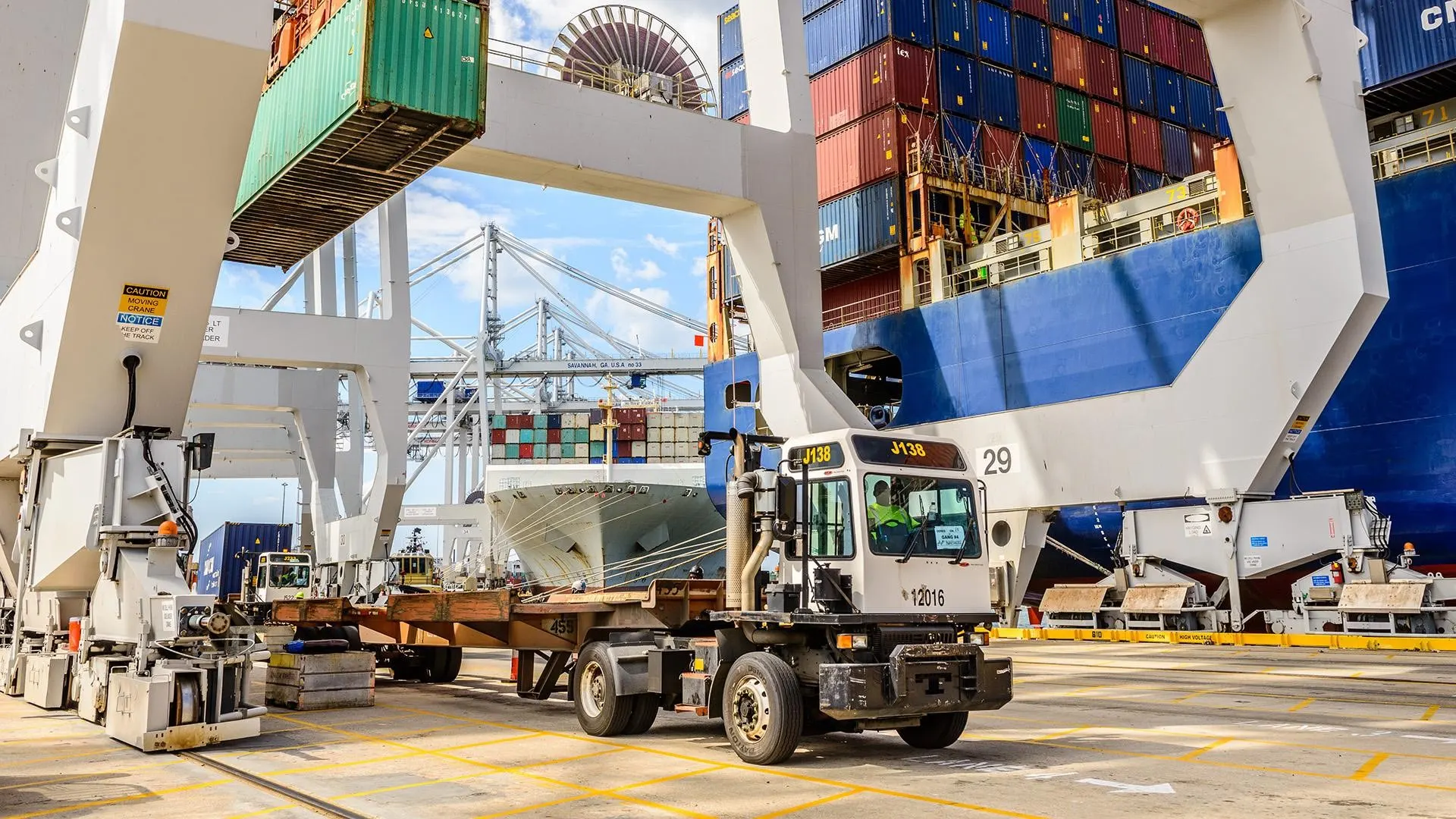
The Identification Engine associates physical observations and events with the correct entity. In a port or terminal, relevant entities may include shipping containers, cargo units, yard tractors, terminal trucks, forklifts, reach stackers, cranes, chassis, and other handling equipment.
Possible inputs include identifier reads, location observations, gate events, equipment records, and transfer confirmations. Depending on the operating environment, identification may use radio-frequency identification (RFID), Bluetooth Low Energy (BLE), ultra-wideband (UWB), vision systems, or combinations of methods. These are implementation options, not claims of universal compatibility.
The engine’s output is an identity-linked event or record that can be associated with a time, location, movement, or operational transaction. Missing reads, duplicate events, stale observations, and incorrect associations must be handled rather than treated as confirmed movements.
Example application: associating a container identifier with gate-in, yard transfer, and dispatch observations so that teams can review gaps between recorded and expected movement. An observation alone does not prove that a handover or receipt was completed.
The Sensing Engine captures measurements that describe equipment condition and relevant operating conditions. Potential subjects include quay cranes, rubber-tired gantry cranes, rail-mounted gantry cranes, reach stackers, terminal tractors, conveyors, pumps, and supporting infrastructure, where suitable measurements are available.
Depending on the equipment and maintenance question, inputs may include vibration, temperature, pressure, electrical measurements, position, load-related measurements, visual observations, or environmental conditions. Sensor selection, placement, measurement range, sampling interval, calibration, and time alignment must be established for each use case.
The engine produces time-associated measurements and quality information for downstream analysis. Missing readings, sensor drift, outliers, failed devices, and changes in operating mode can affect interpretation. Measured values should be distinguished from inferred equipment states.
Example application: collecting vibration and temperature measurements from a selected crane subsystem to support condition review. Any alert or condition assessment requires evaluation against representative operating data and an appropriate baseline.
The AI Decision Engine interprets identification events, sensor measurements, historical records, and operational context. It can be designed to support tasks such as anomaly detection, equipment condition assessment, risk prioritization, movement exception review, forecasting, and constrained resource recommendations.
In port and terminal operations, decision inputs may include equipment availability, container or cargo status, work instructions, operating schedules, sensor history, maintenance records, and applicable business rules. The quality and timeliness of these inputs affect the usefulness of the output.
Outputs may include an alert, an assessment, a ranked exception, a forecast, or a recommendation for review. Each decision function needs a defined input set, intended user, uncertainty handling, evaluation method, and escalation path. When observations are stale, confidence is insufficient, or conditions differ from those evaluated, the system should be able to defer a recommendation or request human review.
Example application: identifying a developing equipment condition that may warrant inspection, then presenting the relevant measurements and maintenance context to the responsible team. An anomaly alert does not by itself establish a confirmed failure or predict a specific failure time.
The Physical AI Action Engine provides the functional path from an authorized decision to a physical response. Potential port and terminal applications may involve a defined equipment adjustment, a controlled movement request, or another bounded action where a suitable interface and approved operating procedure exist.
The action path must define the target equipment, command format, authorization, operating limits, interlocks, protective functions, manual override, and behavior during communication loss or failed execution. The engine must distinguish between a workflow request, a command sent to an interface, an acknowledgment, and an independently verified physical outcome.
Example application: after a qualified operational decision and required approval, issuing a bounded command through an approved equipment interface and checking subsequent position or sensor information to determine whether the requested state was reached. This is an illustrative application concept, not a statement that a particular terminal-control interface is currently implemented or certified.
A software demonstration or simulated control sequence does not establish that physical equipment can be operated safely in production.